Scientists have made a surprising new discovery about 3I/ATLAS and it could change the story completely
Context mode is active. Hover over any highlighted term to see its definition. Click a nested term to go deeper.
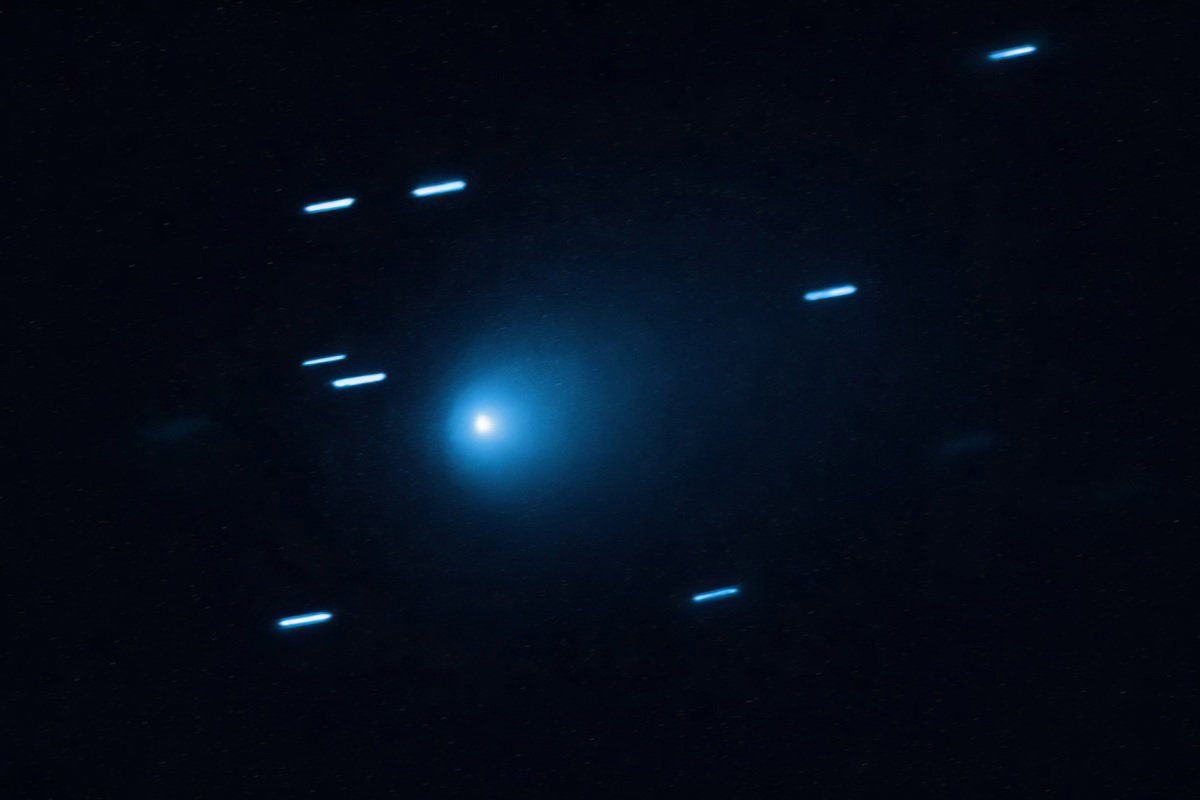
Astronomers are reeling from a flurry of groundbreaking discoveries about 3I/ATLAS, the third confirmed interstellar object to traverse our solar system, with new data from the James Webb Space Telescope (JWST) revealing the first-ever detection of methane on such a cosmic visitor. Coupled with exceptionally high levels of carbon dioxide and a recent age estimate placing it at a staggering 7 billion years old, these findings are fundamentally reshaping our understanding of planetary formation beyond our own stellar neighborhood. The unexpected chemical signature suggests 3I/ATLAS originated in an extremely cold, vastly different environment than our solar system, potentially even predating the Sun itself. This challenges long-held assumptions about the uniformity of protoplanetary disk compositions across the Milky Way and intensifies the debate surrounding the unique properties of interstellar interlopers like 'Oumuamua and 2I/Borisov. Further analysis, including the detection of surprisingly abundant 'heavy water' (deuterated water) by ALMA, reinforces the theory that 3I/ATLAS hails from a frigid, ancient corner of the galaxy. As 3I/ATLAS continues its hyperbolic trajectory out of our solar system, the scientific community is now racing to refine models of exoplanetary system formation and stellar evolution based on its unique chemical fingerprint. Researchers from institutions like the University of Oxford are leveraging new statistical frameworks, such as the Ōtautahi-Oxford Model, to trace its origins, with future observations from next-generation observatories poised to uncover more of these cosmic messengers and potentially unlock secrets about the early universe.