Solar Storm Unlocks Hidden Danger Within Earth's Magnetic Shield
Context mode is active. Hover over any highlighted term to see its definition. Click a nested term to go deeper.
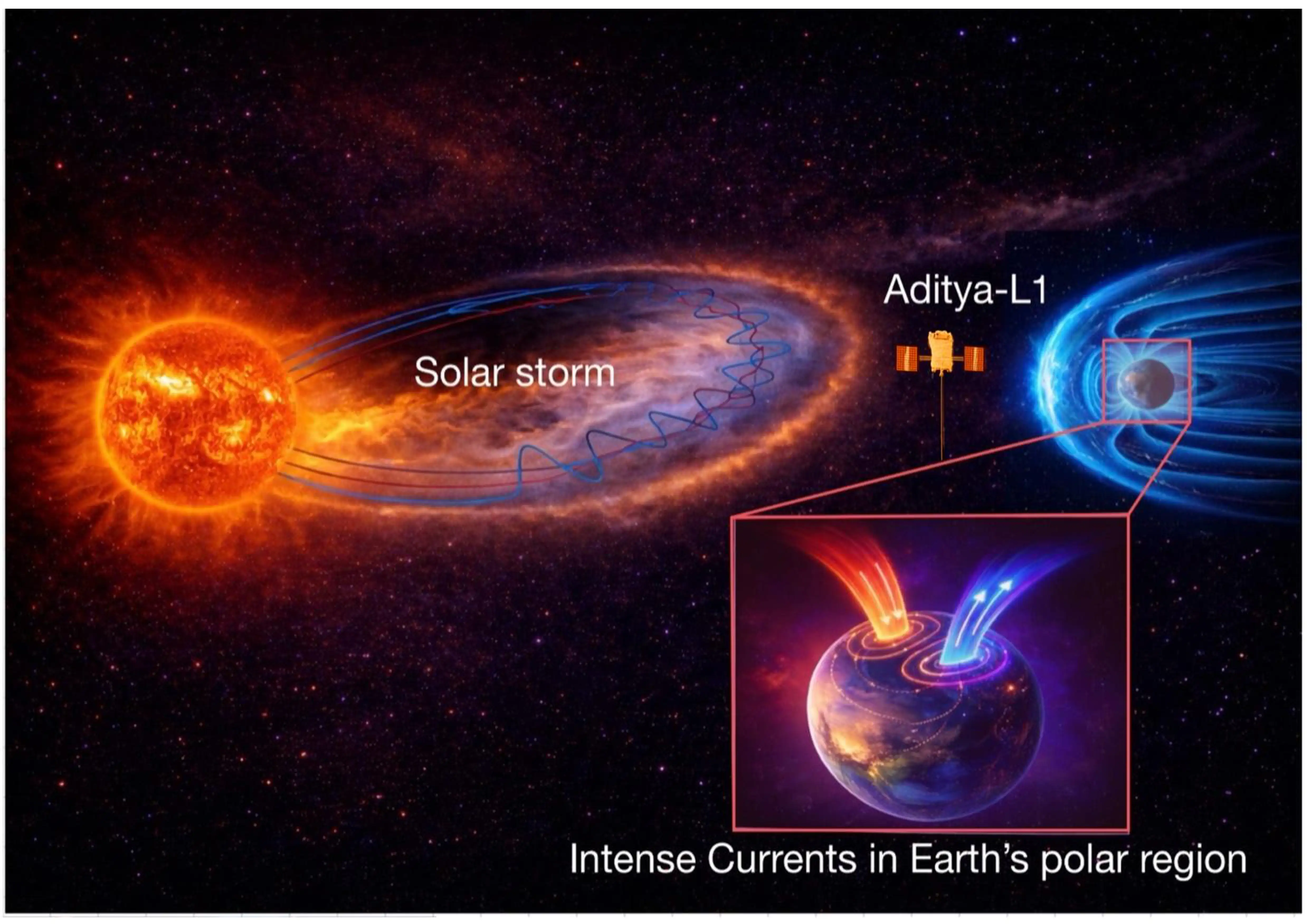
A powerful solar storm in May 2024 has revealed a surprising and previously unrecognized process deep within Earth's magnetic shield, challenging long-held scientific beliefs about how our planet's radiation barriers work. This unexpected event accelerated dangerous electrons in a zone once thought to be safely impenetrable, creating a new radiation risk for vital spacecraft orbiting near Earth. The discovery, detailed in recent research, shows that even our protective bubble can behave in ways we didn't expect when faced with extreme solar activity. Scientists previously believed a strong barrier near the inner edge of the outer Van Allen radiation belt blocked these high-energy 'ultrarelativistic' electrons from getting closer to Earth. However, observations from the Japanese Aerospace Exploration Agency (JAXA) Arase spacecraft during the May 2024 geomagnetic superstorm indicated otherwise. The storm severely disrupted Earth's plasmasphere, causing it to shrink and create a low-density environment. This allowed hotter electrons to penetrate deeper and generate 'chorus waves,' which then acted like accelerators, boosting other particles already inside this supposedly protected zone to dangerous speeds. This finding is a critical wake-up call for space weather predictions and satellite operations, suggesting that regions typically considered safe may become hazardous during intense solar events. Researchers are now working to understand and predict how these energetic electrons behave under such extreme conditions to better protect future missions. The prolonged recovery time of the plasmasphere after the storm—taking more than twice as long as usual—further emphasizes the need for updated models of near-Earth space.