Sonam Wangchuk's Delhi Hunger Strike Demands Ladakh Safeguards, Education Accountability
Context mode is active. Hover over any highlighted term to see its definition. Click a nested term to go deeper.
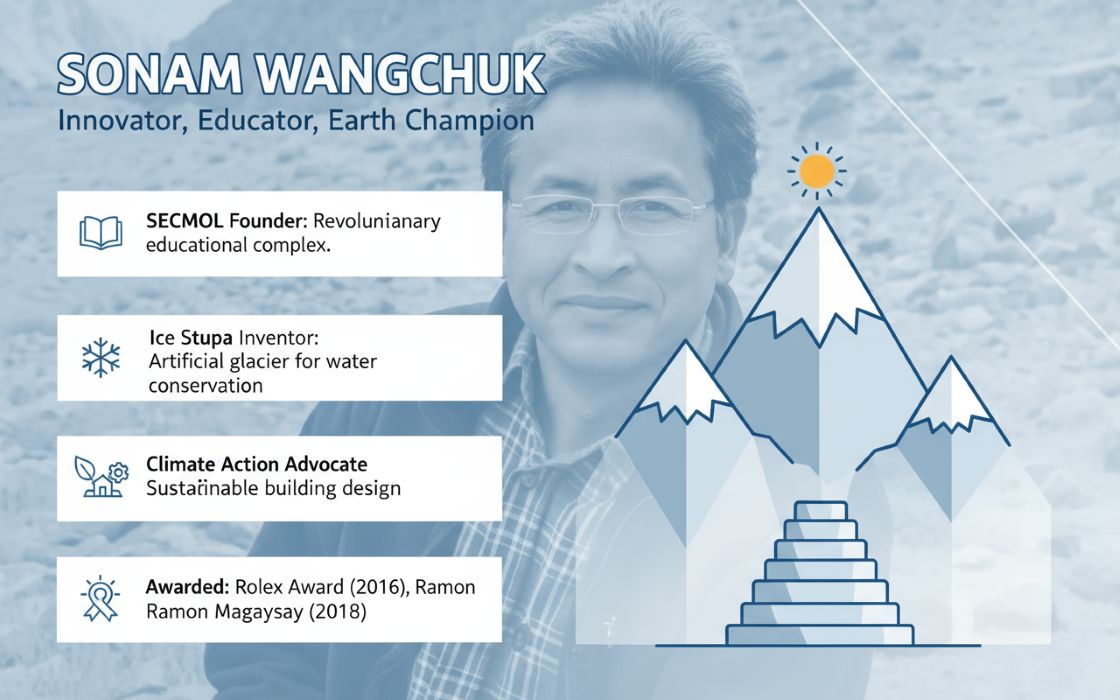
Renowned education reformer and climate activist Sonam Wangchuk has intensified his fight, commencing an indefinite hunger strike at Jantar Mantar in New Delhi on Sunday, June 28, 2026. This powerful act of protest aims to pressure the government on two critical fronts: securing constitutional safeguards for the ecologically fragile region of Ladakh and demanding accountability for alleged irregularities in national examinations, particularly the NEET-UG 2026 paper leak. Wangchuk's protest joins an ongoing demonstration by the Cockroach Janata Party (CJP), drawing significant public attention to systemic governance issues. Wangchuk's core demand for Ladakh is its inclusion under the Sixth Schedule of the Indian Constitution, alongside calls for statehood and greater political representation to protect its unique environment, land, and cultural identity. This renewed agitation follows a series of stalled dialogues with the Central government, including a significant May 22 meeting where the Centre reportedly offered safeguards under Article 371 instead of the desired Sixth Schedule, leading to a trust deficit. His previous detention under the National Security Act (NSA) in September 2025, from which he was released in February 2026, had also fueled the movement for Ladakh rights after it became a Union Territory without a legislative assembly in 2019. Now in its second day, Wangchuk's hunger strike underscores a broader public frustration with governmental inaction, especially concerning education system integrity, highlighted by the CJP demand for Union Education Minister Dharmendra Pradhan resignation. With Wangchuk urging wider public participation, the coming days will test the government's resolve and its willingness to re-engage meaningfully on these pressing national and regional issues, potentially setting the stage for more widespread civil society action.