South Korea's KOSPI index tops 9,000 for first time as chipmakers rally
Context mode is active. Hover over any highlighted term to see its definition. Click a nested term to go deeper.
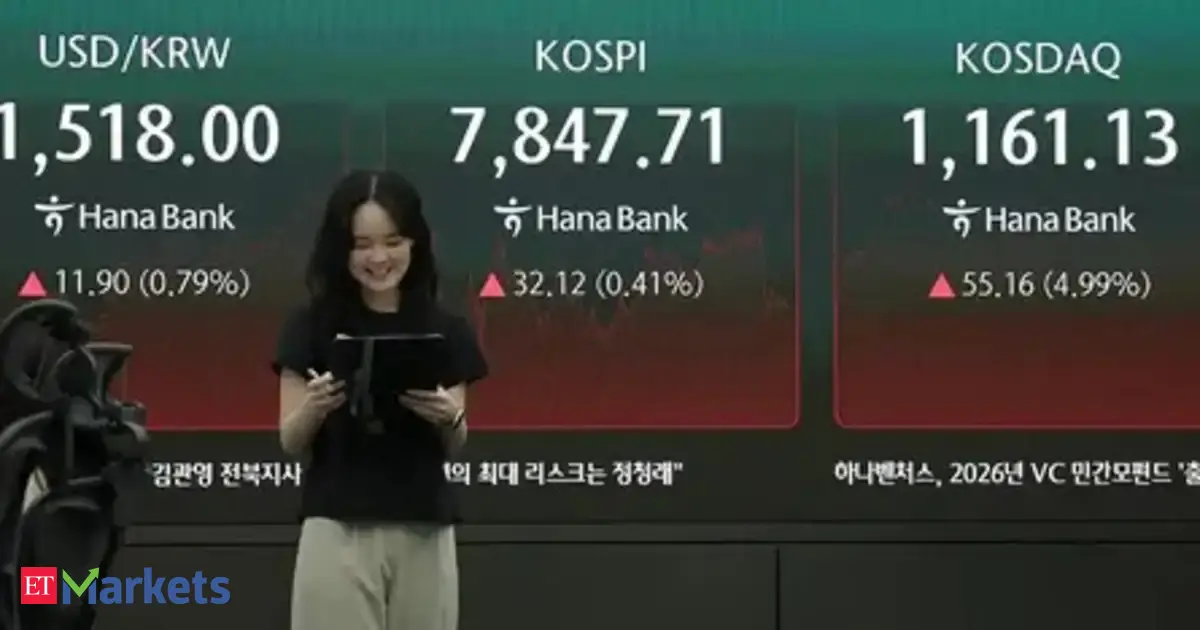
South Korea KOSPI index has surged past the 9,000-point threshold for the first time in its history on Thursday, a monumental leap fueled by an unbridled rally in the nation's dominant chipmakers. Heavyweights Samsung Electronics and SK Hynix spearheaded the charge, their stocks hitting fresh records as global optimism around artificial intelligence (AI) continues to electrify markets. This milestone cements the KOSPI position as a world-leading performer in the current AI-driven bull run, showcasing remarkable gains this year and last. The index's blistering ascent is directly tied to the insatiable demand for advanced semiconductors, particularly High-Bandwidth Memory (HBM) chips, which are critical components for AI accelerators powering everything from data centers to generative AI models. While SK Hynix has recently held a lead in the HBM market, Samsung is aggressively closing the gap, intensifying a fierce competitive dynamic that is driving innovation and production within South Korea tech sector. The surge is further underpinned by robust national export data, with semiconductor shipments reaching record highs, attracting substantial foreign investor inflows to the Korean bourse despite a hawkish stance from the US Federal Reserve and impending domestic monetary policy shifts. Looking ahead, the longevity of this KOSPI rally hinges on sustained global AI investment and the continued ability of South Korean chipmakers to dominate the evolving semiconductor landscape. With the global semiconductor market projected to exceed $1.3 trillion in 2026, largely driven by AI, the stakes are exceptionally high for Seoul's tech giants. Investors will closely monitor any moves by the Bank of Korea regarding interest rates, as well as the broader geopolitical environment, given the KOSPI heavy concentration in a few key tech stocks that make it particularly sensitive to shifts in global spending and supply chains.