South Korea's Kospi Soars 18% as AI Chip Stocks Ignite Record Rally
Context mode is active. Hover over any highlighted term to see its definition. Click a nested term to go deeper.
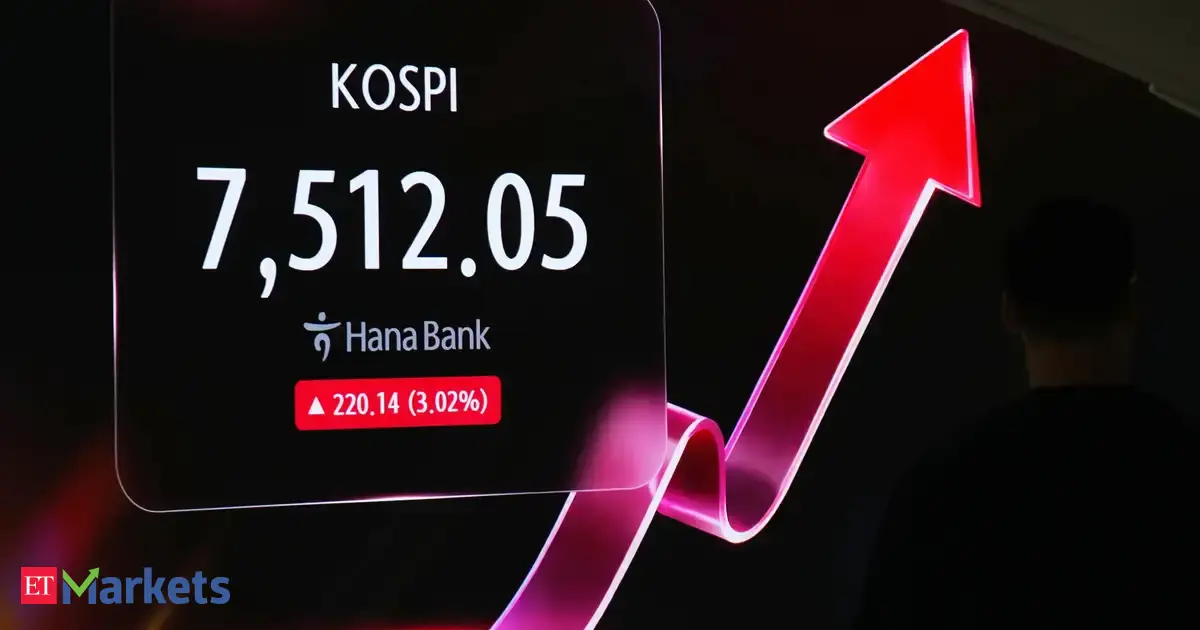
South Korea's Kospi index just saw a monumental leap today, surging nearly 18% in its biggest single-day gain ever, as chipmaking and AI-related stocks staged a dramatic comeback. This explosive rebound directly mirrors a strong Thursday rally on Wall Street, where fears about an 'AI bubble' that had spooked investors earlier in the week seem to have faded for now. The jump comes as a huge relief after the Kospi had plummeted over 16% earlier in the week, marking July as a highly volatile month for the index. The sudden investor confidence arrived following robust earnings reports from US tech giants like Microsoft and Amazon, which largely reassured markets that the massive spending on AI infrastructure is translating into real profits and sustainable demand. This positive sentiment quickly spread, especially to key players like Samsung Electronics and SK Hynix, whose shares soared by 28% and 30% respectively. This boom in semiconductors is crucial for South Korea, which had already raised its 2026 economic growth forecast to a five-year high of 3.0% mid-month, banking on unprecedented semiconductor exports driven by AI investment. Looking ahead, the big question remains whether this AI-driven rally can maintain its momentum or if markets will face renewed volatility, particularly as the Kospi still closes July down over 22% overall, marking its worst monthly performance since the 1997 Asian Financial Crisis. Meanwhile, Japanese markets also climbed, with the Nikkei 225 gaining 4% on the same tech optimism. However, geopolitical tensions in the Middle East continue to simmer, affecting global trade routes like the Strait of Hormuz, even as Brent crude prices saw a slight dip today after a significant monthly rise. Investors will be keenly watching for any shifts in the Federal Reserve stance on interest rates, especially after recent economic data indicated slower US growth.