SpaceX's Crew-13 Docks with ISS in Record Time, Kicking Off Six-Month Mission
Context mode is active. Hover over any highlighted term to see its definition. Click a nested term to go deeper.
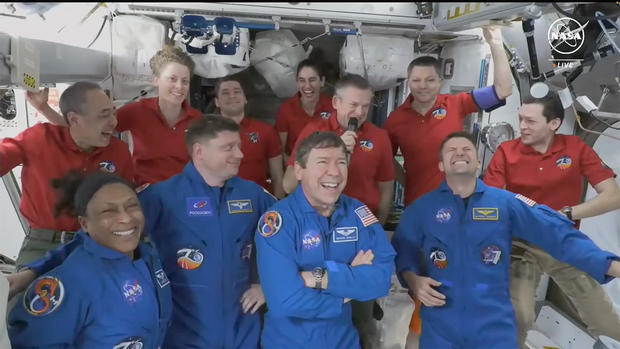
A new four-person crew, including groundbreaking commander Jessica Watkins, has successfully docked with the International Space Station aboard SpaceX Crew Dragon 'Grace' capsule, setting a new American record for the fastest transit to the orbiting lab. The Crew-13 mission, which launched on October 1, 2026, from Florida, faced a three-week delay due to a leaking valve in the capsule's propulsion system but achieved orbital insertion and docking in just under eight hours. This rapid journey marks a significant milestone in commercial spaceflight, delivering a diverse team ready for a critical six-month science expedition. This mission underscores the growing international collaboration in space and the vital role of private companies like SpaceX in human spaceflight. The crew, comprising astronauts from NASA, the Canadian Space Agency, and Roscosmos, is slated to conduct extensive research focusing on human health and performance in microgravity, including studies on blood circulation and stem cell-derived tissues. This work is crucial for preparing future missions beyond low-Earth orbit, such as journeys to the Moon and Mars. Notably, Canadian astronaut Joshua Kutryk will become a father for the third time during his six-month stay, adding a deeply personal dimension to this global endeavor. As Crew-13 begins its residency, it will take over from the Crew-12 astronauts, who are preparing for their return to Earth in the coming days. The seamless handover process highlights the continuous human presence on the ISS, a testament to decades of international cooperation. With the Falcon 9 rocket's reusable first stage having successfully landed back at Cape Canaveral, and the Crew Dragon 'Grace' on its second flight, the mission further showcases the advancements in reusable space technology. The scientific discoveries from this mission are expected to contribute significantly to both space exploration and applications benefiting life on Earth.