Sri Lanka raises interest rate by bigger-than-expected 100 bps amid M.East crisis
Context mode is active. Hover over any highlighted term to see its definition. Click a nested term to go deeper.
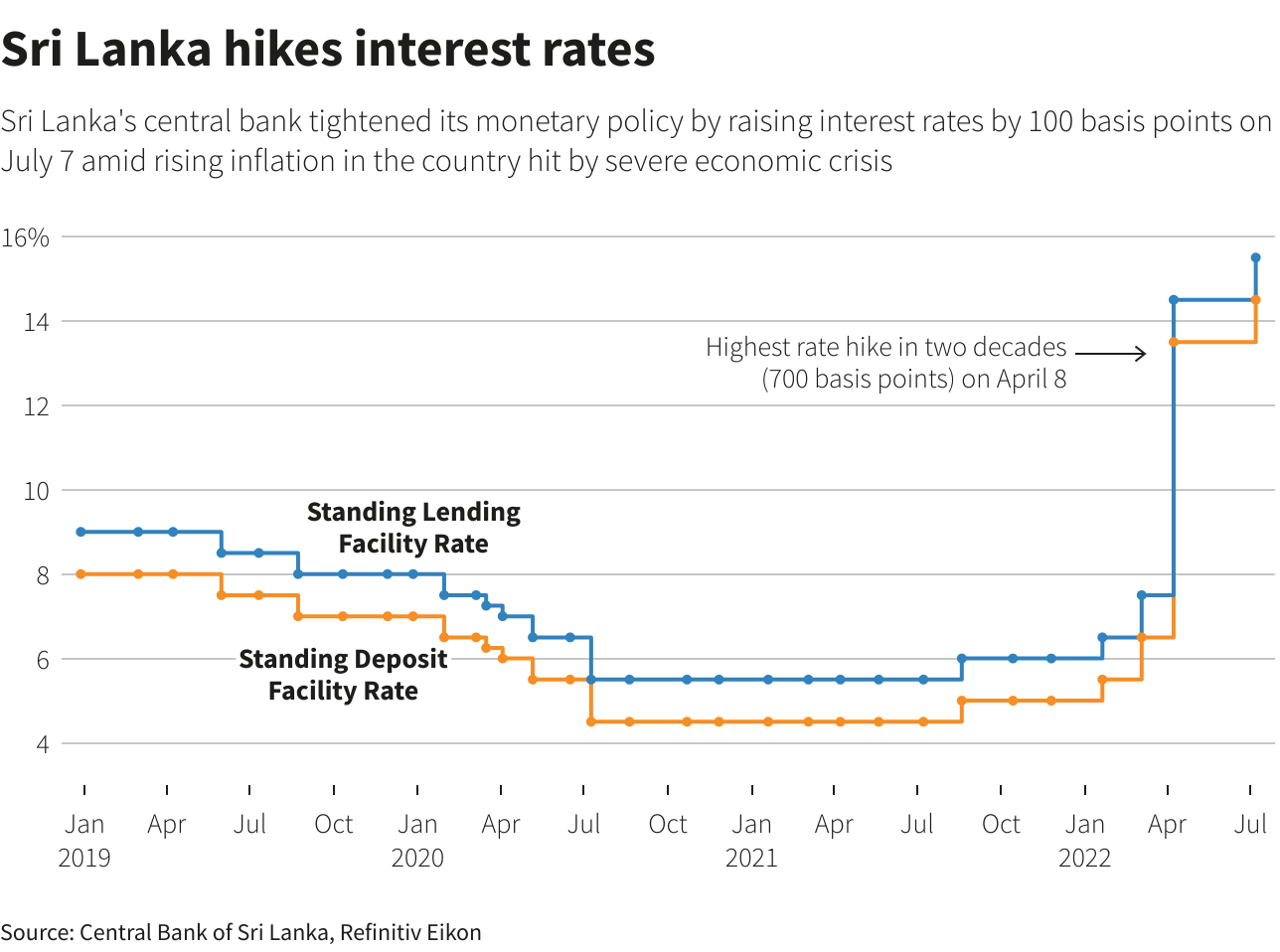
In an unexpected move signaling heightened economic distress, the Central Bank of Sri Lanka (CBSL) has hiked its key interest rate by a larger-than-forecasted 100 basis points, pushing borrowing costs higher as the nation grapples with severe imported inflation stemming from an intensifying Middle East crisis. This hawkish pivot underscores Colombo's urgent fight to stabilize its fragile post-default economy amid global commodity price shocks and disrupted supply chains. The aggressive rate hike directly confronts the economic fallout from escalating geopolitical tensions in the Middle East, which have driven up crude oil and shipping costs, exerting immense pressure on the vulnerable Sri Lankan Rupee. Already deep into an International Monetary Fund (IMF) Extended Fund Facility program, Sri Lanka's authorities are battling to maintain fiscal discipline and contain inflationary pressures, which risk derailing its nascent recovery and arduous debt restructuring efforts initiated after its 2022 default. Looking ahead, this tightening of monetary policy is likely to dampen domestic economic growth and investment, although it aims to buttress the LKR and temper price increases. Observers will now keenly watch for the IMF assessment during upcoming program reviews and how global commodity markets, particularly crude oil, react to sustained Middle East volatility, determining if further hawkish actions by the CBSL will be necessitated.