Supreme Court Delivers Crushing Blow to Trump, Upholds Birthright Citizenship in Landmark Ruling
Context mode is active. Hover over any highlighted term to see its definition. Click a nested term to go deeper.
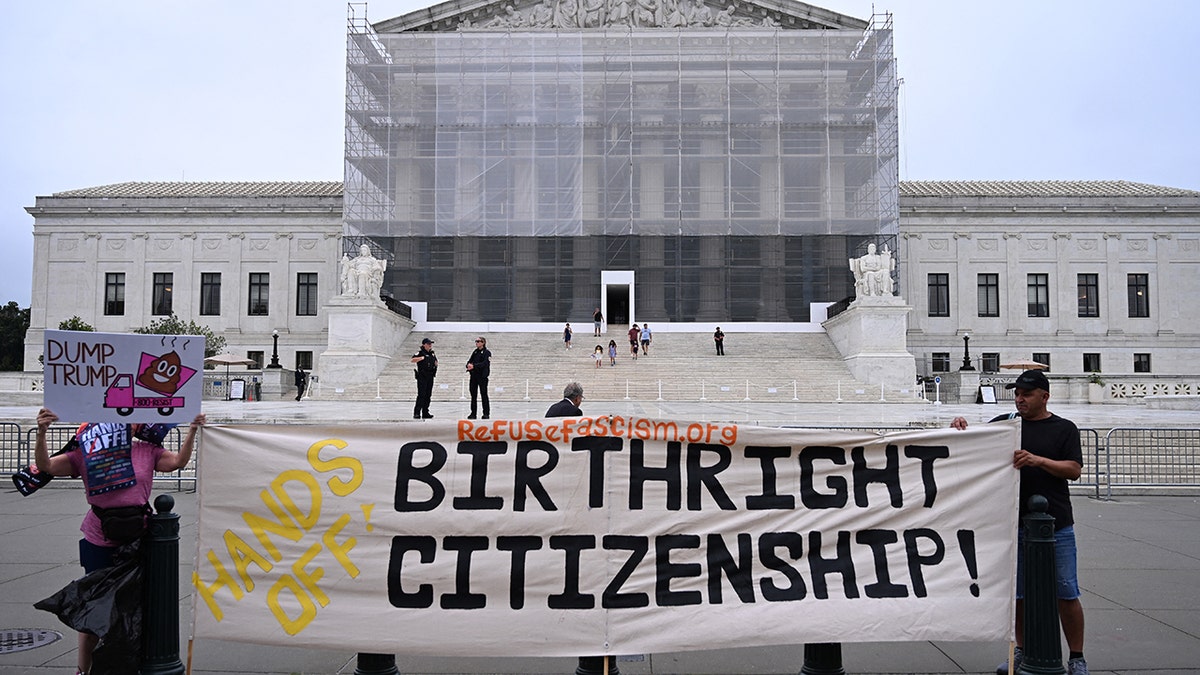
In a seismic decision that reshapes the American political and legal landscape, the US Supreme Court has decisively upheld birthright citizenship, delivering a significant defeat to former President Donald Trump's efforts to restrict it. The 6-3 ruling reaffirms the long-standing interpretation of the 14th Amendment, ensuring citizenship for nearly all individuals born on US soil. This judgment effectively scuttles a key immigration policy initiative that had been a cornerstone of Trump's agenda, marking a pivotal moment in the nation's ongoing debate over who belongs. The high court's majority opinion, penned by Chief Justice John G. Roberts Jr., leaned heavily on the historical understanding of the 14th Amendment Citizenship Clause and the foundational precedent set by the 1898 case of United States v. Wong Kim Ark. Trump's Executive Order 14160, signed on his first day in his second term, had sought to redefine who is 'subject to the jurisdiction' of the United States, arguing that children of undocumented immigrants or those on temporary visas should not automatically receive citizenship. However, the Court rejected this narrow interpretation, emphasizing that such a move would have created a dangerous two-tiered society and potentially rendered millions of American-born children stateless. Justices Clarence Thomas, Samuel A. Alito, and Neil M. Gorsuch dissented, echoing concerns about 'birth tourists' and arguing for a more limited view of the amendment. While President Trump swiftly denounced the ruling as 'too bad' and urged Congress to pursue legislative action to end birthright citizenship, the path forward for such a measure remains incredibly challenging. Amending the Constitution requires a two-thirds majority in both chambers of Congress or a constitutional convention called by two-thirds of state legislatures, an exceptionally high bar. Any statutory changes would also face significant hurdles, including overcoming the Senate's 60-vote filibuster, which has proven difficult for divisive issues. This ruling solidifies a core tenet of American identity and will likely shape future immigration debates, underscoring the enduring power of judicial review in safeguarding constitutional principles against executive directives.