Syria's New Parliament Convenes, Charting Path Beyond Assad's Shadow
Context mode is active. Hover over any highlighted term to see its definition. Click a nested term to go deeper.
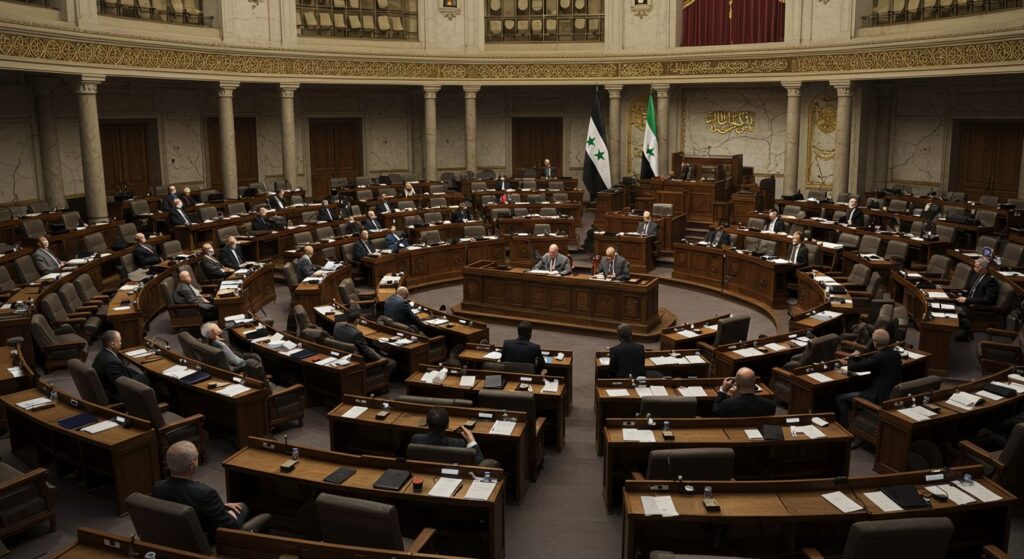
Syria officially turned a new page on Sunday, July 12, 2026, as its newly formed People's Assembly gathered for the first time in Damascus, a significant milestone 19 months after President Ahmed al-Sharaa rebel forces overthrew Bashar al-Assad decades-long rule. This inaugural session kicks off a critical 30-month term for the 210-member body, which is tasked with drafting a new constitution and laying the foundation for a more democratic future, despite its currently limited powers. President al-Sharaa, addressing the lawmakers, urged them to embody 'responsibility and competence,' emphasizing a commitment to dialogue and the rule of law as Syria navigates a complex political transition. This assembly marks a stark departure from the 'rubber-stamp' legislature of the Assad era, yet its formation has drawn criticism due to an indirect selection process where al-Sharaa appointed one-third of the members, and electoral colleges chose the rest. Key challenges remain, including ongoing regional instability, sectarian tensions, and the continued struggle for adequate representation for minority groups, particularly the Druze in Sweida Province where seats remain vacant. Looking ahead, the People's Assembly is expected to appoint a committee to draft Syria permanent constitution, a crucial step towards long-term stability and eventual general elections. President al-Sharaa's government, which has been actively working to mend ties with Western states and integrate various armed groups into a unified national framework, will closely watch how this new legislative body tackles Syria dire economic state and persistent security threats, including remnants of ISIS. The success of this transitional period hinges on overcoming deep-seated divisions and establishing truly inclusive governance that addresses the needs of all Syrian people.