Texas will require students to read Bible passages in new state curriculum
Context mode is active. Hover over any highlighted term to see its definition. Click a nested term to go deeper.
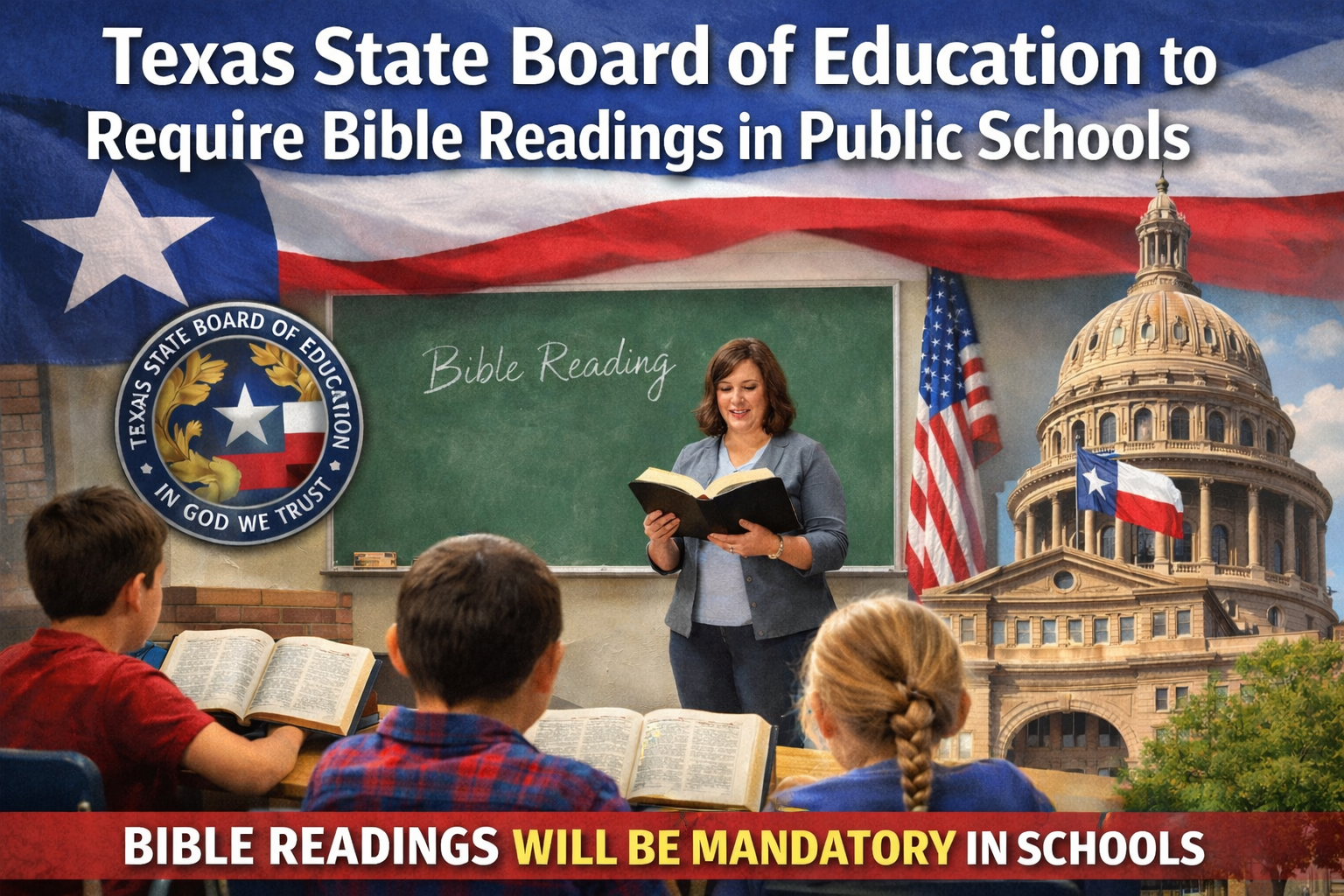
Texas is officially putting the Bible back in public schools, making history as the first state to mandate direct religious texts as required reading. On Friday, the Republican-controlled Texas State Board of Education (SBOE) gave its final nod to a new statewide reading list that embeds numerous Bible passages across grade levels, alongside a revamped social studies curriculum emphasizing Biblical concepts. This groundbreaking move will impact 5.5 million students across Texas public schools, with implementation staggered starting in the 2030-2031 school year. This decision ignites a fiery debate over the delicate balance between religious freedom and the constitutional separation of church and state. Critics, including groups like the American Civil Liberties Union of Texas and the Texas Freedom Network, vehemently argue that the curriculum promotes Christianity at the expense of diversity and could lead to legal battles, much like the ongoing challenges against Texas's law requiring the display of the Ten Commandments in classrooms. Supporters, however, see it as a vital step to instill Judeo-Christian values and appreciate America's historical roots. The curriculum also faces scrutiny for trimming lessons on minority groups and presenting a narrow view of world cultures. What's next? Expect immediate and intense legal challenges from civil liberties and religious freedom advocates, who are already preparing for a fight to protect the constitutional rights of students of all backgrounds. As the 2030 implementation date approaches, educators will grapple with integrating the extensive new reading list, which includes everything from David and Goliath for second graders to the Book of Job for tenth graders, into already packed school years. This move by Texas is likely to embolden similar efforts in other states, fueling a national conversation about the role of religion in public education.