The human eye may hold the fix for self-driving cars
Context mode is active. Hover over any highlighted term to see its definition. Click a nested term to go deeper.
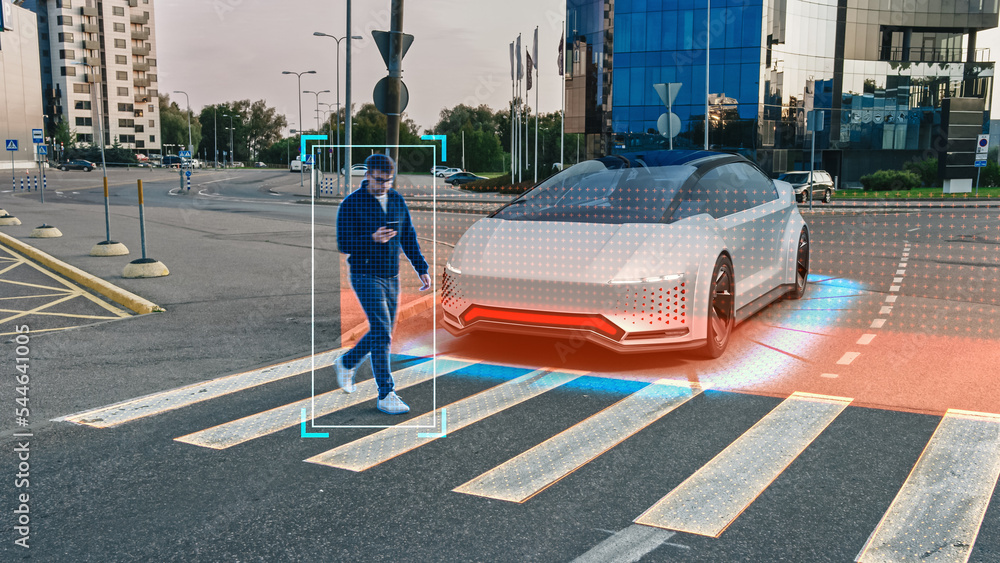
Researchers at Penn State have unveiled a groundbreaking artificial vision system, inspired by the human eye, that could finally solve a major hurdle for self-driving cars: safely navigating tricky, mixed lighting conditions. This new technology uses tiny electronic components called photomemristors, which can adapt to rapid light changes in seconds—far faster than human eyes—and improve how autonomous vehicles see in complex environments like driving at night with harsh headlight glare or moving through tunnels. Currently, self-driving cars rely heavily on traditional camera sensors and computer vision algorithms, which often struggle when both very bright and very dark areas appear in the same view, leading to dangerous 'blind spots' or misinterpretations. This bio-inspired approach, detailed in the journal Nature Communications, directly addresses these long-standing perception challenges by mimicking how our own eyes' rods and cones work together to maintain clear vision across varying light levels. This isn't just a theoretical win; initial tests showed the system correctly recognized objects with over 95% accuracy in mixed-light settings, significantly outperforming current systems. Looking ahead, this breakthrough could accelerate the widespread adoption of self-driving cars and other robotic devices by making them much safer and more reliable in the real world. The Penn State team plans to expand this research, potentially integrating it into multimodal systems that process both visual and tactile data. This advancement aligns with the broader push towards neuromorphic computing and event cameras, which are designed to process visual information with human-like efficiency and speed, paving the way for a new generation of truly 'seeing' autonomous systems.