Tragedy Strikes Himachal: Boulders Crush SUV, Killing 13 Including Infant on Mountain Road
Context mode is active. Hover over any highlighted term to see its definition. Click a nested term to go deeper.
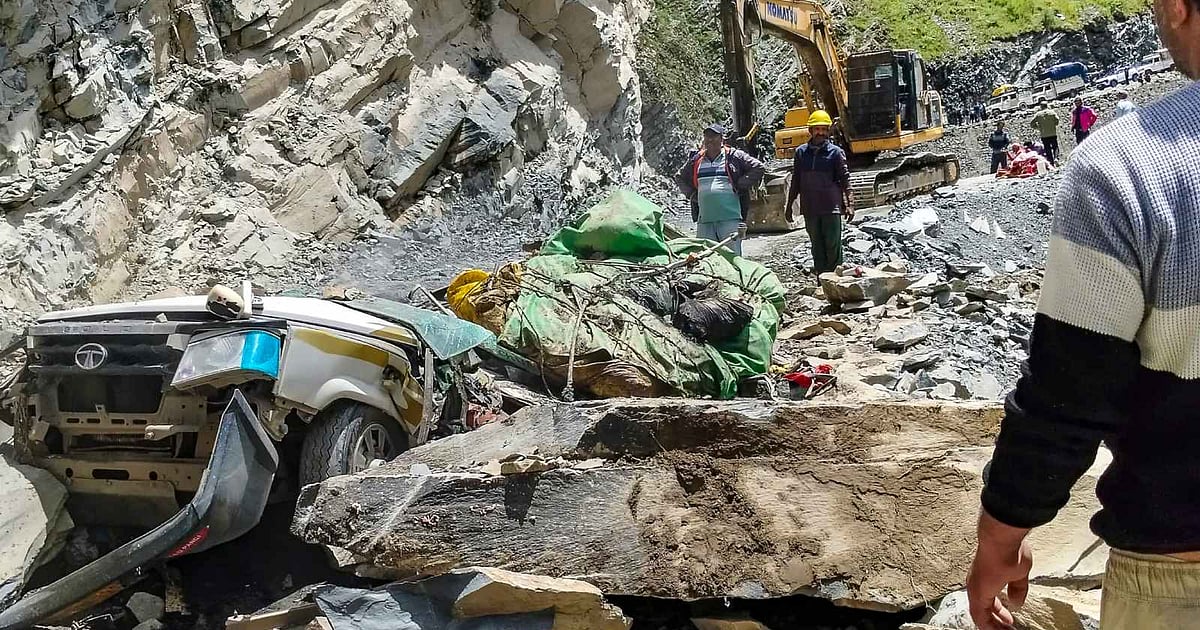
Thirteen lives, including that of a six-month-old infant, were tragically lost and two others injured when massive boulders suddenly crashed onto a moving SUV in Himachal Pradesh's Lahaul-Spiti district on Friday. The horrific incident occurred near Kadu Nala on the Udaipur-Killar road, a notoriously precarious stretch that had only just reopened after being cleared of an earlier landslide, trapping fifteen passengers in the ill-fated vehicle en route from Kullu to Killar. The tragedy underscores the severe and escalating risks faced by commuters in Himachal Pradesh, particularly during the ongoing monsoon season, which routinely brings heavy rainfall and heightened geological instability to the fragile Himalayan terrain. The Lahaul-Spiti region, known for its challenging topography, has been experiencing increased rainfall due to changing climate patterns, exacerbating the threat of landslides and rockfalls. Authorities, including the Border Roads Organisation (BRO), frequently battle to keep these vital routes open, with over 130 roads across the state recently closed and the District Disaster Management Authority (DDMA) issuing advisories for continuous rockfall along routes like the Sansari–Killar–Tandi (SKTT) road where this accident took place. In the immediate aftermath, rescue operations were swiftly launched by police and local administration, though persistent rainfall and the threat of fresh slides continue to complicate efforts. Chief Minister Sukhvinder Singh Sukhu has directed officials to expedite relief and rescue, while President Droupadi Murmu expressed her condolences, highlighting the national concern over such recurrent disasters. This incident is a stark reminder of the urgent need for enhanced road safety infrastructure and a comprehensive, long-term strategy to mitigate the impact of natural calamities, especially given the rising intensity and frequency of extreme weather events in this ecologically sensitive region.