Trump Boosts India-Mideast Corridor to Bypass Iran's Chokepoints Amid Regional War
Context mode is active. Hover over any highlighted term to see its definition. Click a nested term to go deeper.
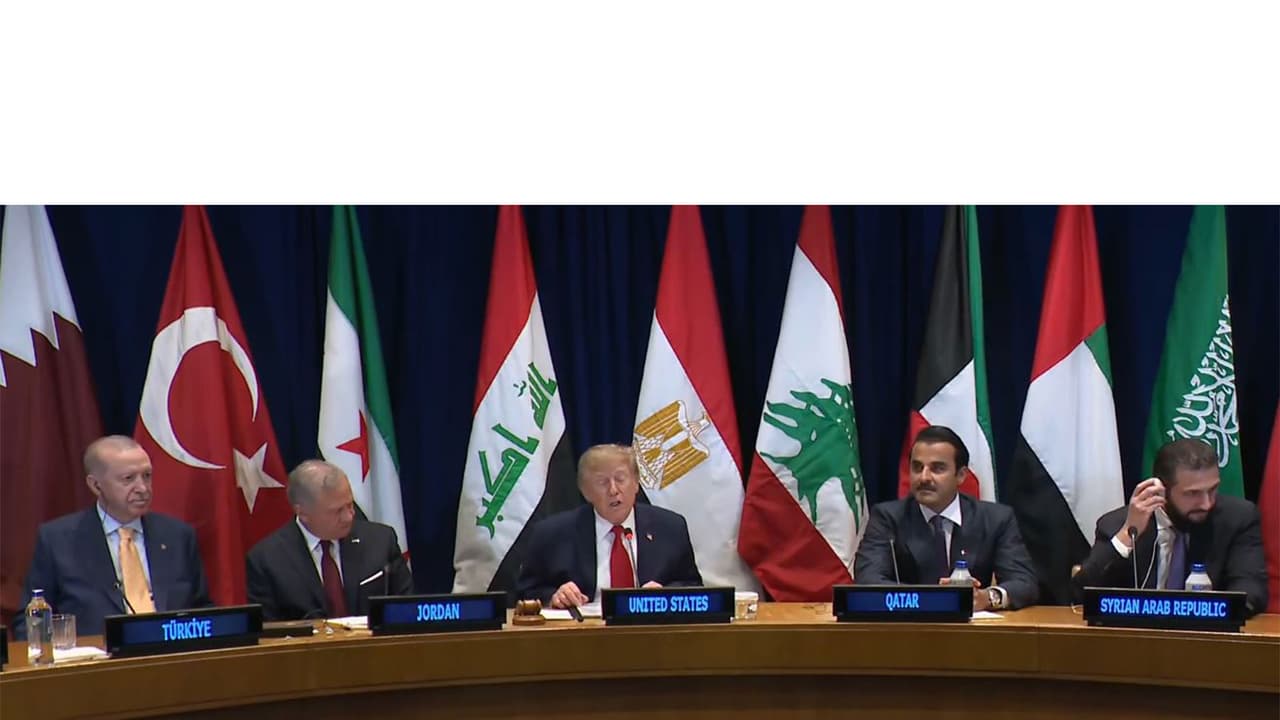
US President Donald Trump has thrown significant weight behind the India-Middle East-Europe Economic Corridor (IMEC), announcing strong support for the ambitious project at a multilateral meeting with Gulf Cooperation Council and Arab leaders during the UN General Assembly session this week. His backing comes as part of a crucial strategy to move vital energy infrastructure away from areas controlled by Iran, directly addressing recent 'terrorist attacks' on commercial shipping and the ongoing US-Iran war that has severely disrupted key maritime routes. This renewed push for IMEC, first unveiled at the 2023 G20 Summit, positions it as a strategic counter-move against China's expansive Belt and Road Initiative and aims to slash transit times between India and Europe. The corridor's importance is amplified by the acute instability in the Middle East, with Houthi attacks continuing to plague the Red Sea and the Strait of Hormuz experiencing significant blockades and disruptions due to the US-Iran conflict, pushing up shipping costs and increasing global supply chain uncertainty. Such turmoil underscores the urgent need for resilient alternative trade and energy pathways. While Trump's endorsement injects new momentum, IMEC still faces hurdles, including securing massive funding and navigating the complex geopolitical landscape, especially given that parts of the proposed route traverse areas like Jordan and Israel, with some Arab partners exploring alternative pathways that might bypass Israel. Iran, meanwhile, has advanced legislation to impose penalties and even cargo seizures on vessels violating its new rules in the Strait of Hormuz, signaling a hardening stance on maritime control. The coming months will reveal if this high-level political will can translate into tangible progress on the ground amidst simmering regional conflicts and competing strategic interests.