Trump Ties US-Saudi Nuclear Deal to Abraham Accords, Shifting Middle East Dynamics
Context mode is active. Hover over any highlighted term to see its definition. Click a nested term to go deeper.
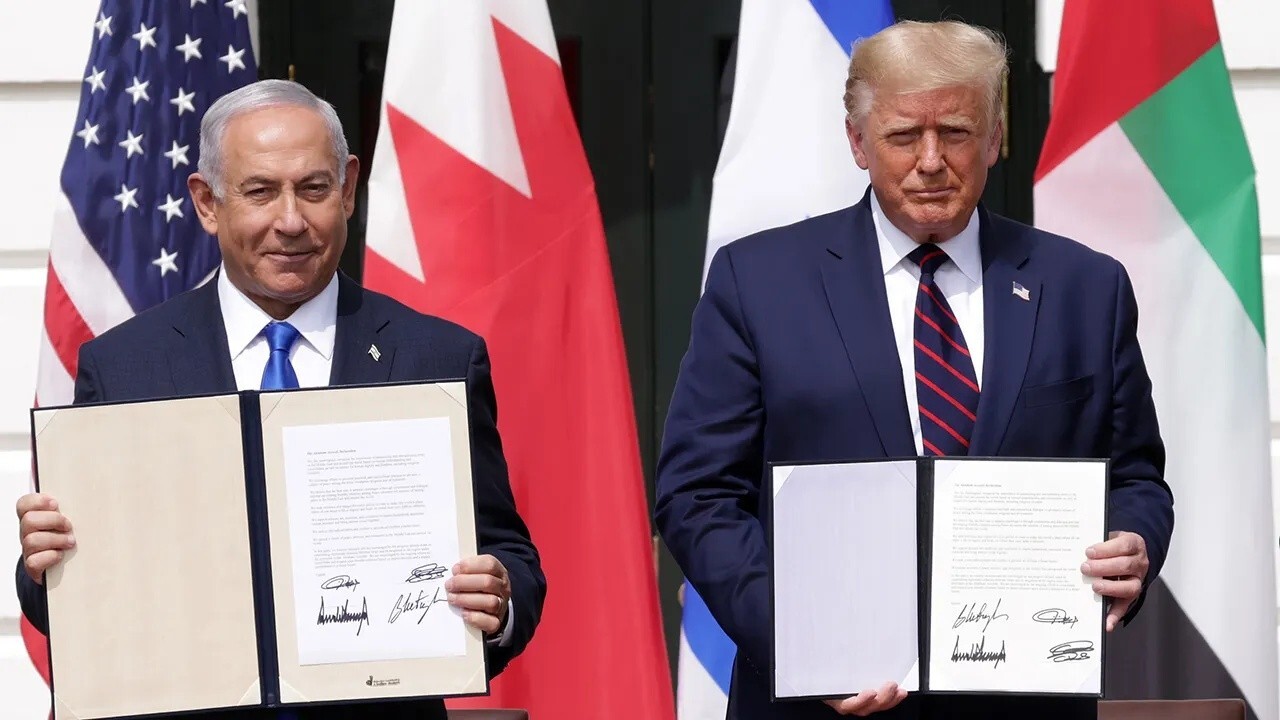
Just a day after a landmark civil nuclear cooperation agreement was announced between the United States and Saudi Arabia, US President Donald Trump has unexpectedly introduced a critical new condition: the deal is now 'totally subject' to Riyadh normalizing ties with Israel through the Abraham Accords. This sudden pivot, declared by Trump on Truth Social on Thursday, July 23, 2026, injects immediate uncertainty into a multibillion-dollar pact aimed at granting Saudi Arabia access to US nuclear technology for peaceful energy generation. The initial US-Saudi '123 agreement,' signed on Wednesday, July 22, by US Energy Secretary Chris Wright and Saudi Minister of Energy Prince Abdulaziz bin Salman, laid the groundwork for a 30-year partnership focusing on civilian nuclear energy, with strict provisions against military use and uranium enrichment. However, the President's post-announcement demand fundamentally alters the geopolitical stakes. While Israeli Prime Minister Benjamin Netanyahu quickly lauded the potential expansion of the Abraham Accords, Saudi Arabia has historically maintained that normalization with Israel hinges on a clear path to Palestinian statehood, a concept Netanyahu has consistently rejected. This condition also reignites concerns among non-proliferation experts, especially since the deal reportedly doesn't include the stringent International Atomic Energy Agency Additional Protocol, unlike previous US nuclear agreements. With the deal still requiring congressional approval, the added Abraham Accords condition is poised to spark intense debate in Washington and across the Middle East. The immediate future of this ambitious nuclear pact, which seeks to deepen US-Saudi ties and keep competitors like China and Russia out of Saudi Arabia nuclear sector, now rests precariously on a deeply contentious diplomatic challenge. All eyes will be on Riyadh's response and whether the kingdom is willing to link its civilian nuclear ambitions so directly to normalization with Israel, reshaping regional alliances for decades to come.