Trump's Unfiltered Eulogy for Hawkish Senator Lindsey Graham Sparks Conversation on Legacy
Context mode is active. Hover over any highlighted term to see its definition. Click a nested term to go deeper.
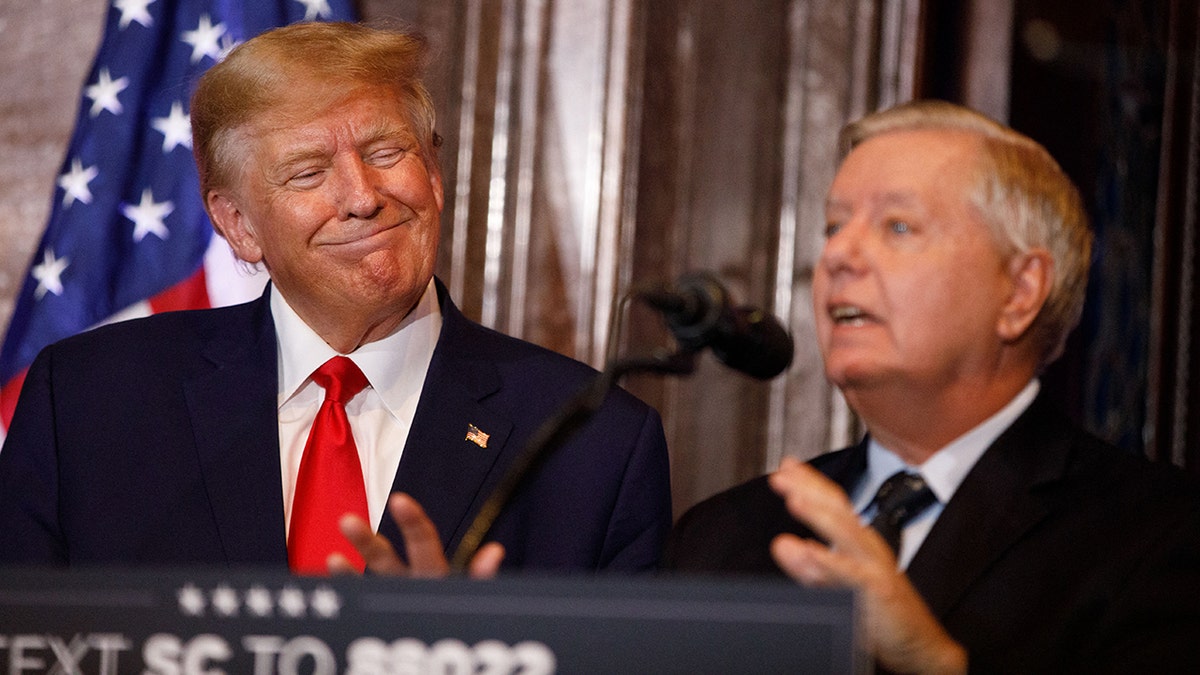
Former President Donald Trump delivered a candid eulogy for the late Senator Lindsey Graham at the Washington National Cathedral on July 28, 2026, marking the passing of the long-serving South Carolina Republican. Trump's remarks, which described Graham as a man who 'never saw a war he didn't like,' highlighted the senator's unwavering belief in assertive American power on the global stage, drawing attention to his consistent advocacy for robust military engagement. The funeral, attended by a host of dignitaries including Israeli Prime Minister Benjamin Netanyahu and Ukrainian President Volodymyr Zelenskyy, underscored Graham's significant international influence. Graham, who passed away on July 11, 2026, due to an aortic dissection, was known for his complex political journey, transforming from a vocal critic of Trump in 2016 to one of his staunchest allies. Throughout his career, particularly as Chairman of the Senate Budget Committee, he championed strong military aid for Ukraine, advocated for Israel defense, and pushed for aggressive stances against Russia and Iran, often shaping critical foreign policy debates within the U.S. Senate. His approach was rooted in a conviction that American military might was essential for global stability, a view that defined much of his three decades in Congress. Trump's eulogy has reignited discussions about Graham's enduring legacy and the evolving nature of American foreign policy, especially within the Republican Party. The presence of international leaders at the service, many of whom relied on Graham's advocacy, signals the void his death leaves in global alliances and ongoing conflicts. As the U.S. navigates its role in an increasingly complex world, Graham's hawkish principles and his unique relationship with influential figures like Trump will continue to be a benchmark for future debates on interventionism and international engagement.