UK, Japan poised to seal a landmark $24 billion investment and tech partnerships deal
)
Context mode is active. Hover over any highlighted term to see its definition. Click a nested term to go deeper.
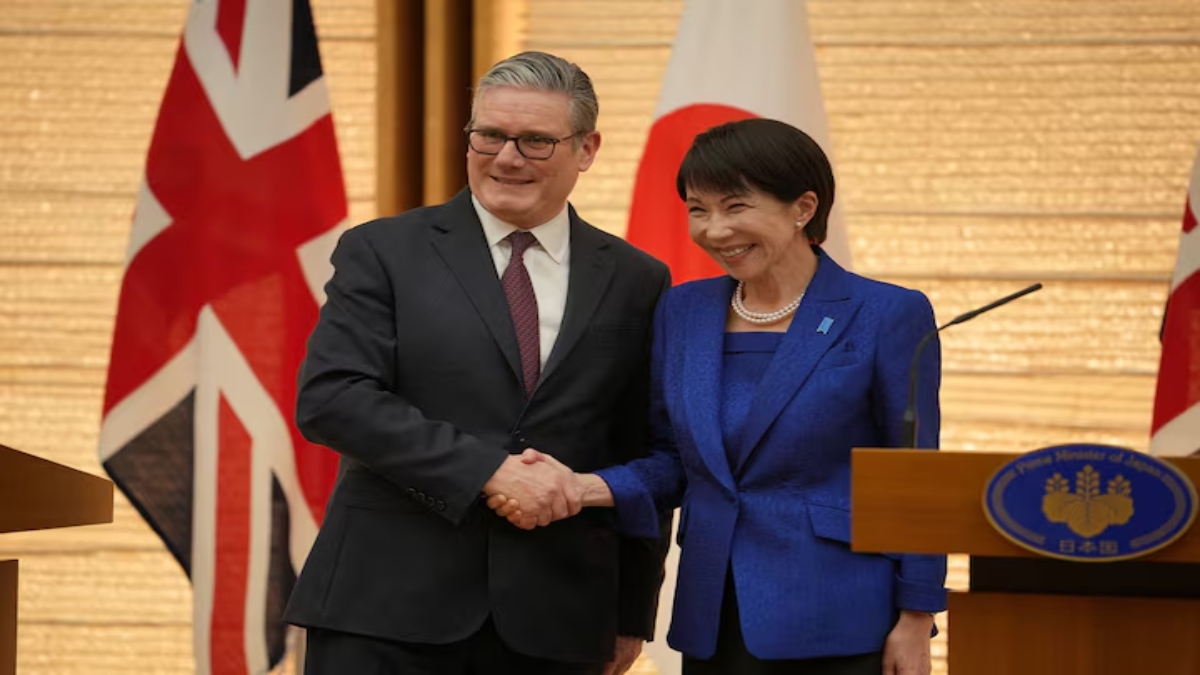
The United Kingdom and Japan have finalized a landmark investment and technology partnership deal valued at over £18 billion ($24.1 billion), aiming to generate tens of thousands of new jobs across both nations. The agreement, sealed during meetings between UK Prime Minister Keir Starmer and Japanese Prime Minister Sanae Takaichi ahead of the G7 summit in France, underscores a strategic push into critical sectors like clean energy, advanced technology, infrastructure, and financial services. This extensive pact includes a significant Japanese investment pipeline of £9 billion for infrastructure and financial services, alongside an additional £9 billion earmarked specifically for UK offshore wind projects, targeting 5.9 gigawatts of capacity. The deal represents a profound deepening of economic ties, building upon the existing UK-Japan Comprehensive Economic Partnership Agreement (CEPA) that has been in effect since January 2021. For the UK, this initiative is a pivotal component of its post-Brexit economic strategy and its 'Indo-Pacific tilt,' seeking to secure new investment and diversify supply chains amidst a complex geopolitical landscape. Japan, a global leader in semiconductor manufacturing, gains amplified collaboration in cutting-edge fields like AI, quantum technologies, and digital infrastructure, which are crucial for its long-term growth and economic security. Key companies such as Hitachi Energy, Rolls-Royce, and Eisai are poised for significant roles, with specific projects like the formal partnership between the UK Semiconductor Centre and Japan's Rapidus opening direct pathways for advanced chip manufacturing. Looking ahead, the implementation of this sweeping agreement will be closely watched, particularly as both nations prepare to coordinate further at the upcoming G7 summit. Beyond the immediate economic injection and job creation, the partnership is expected to accelerate joint research and industrial collaboration in areas vital for future resilience and competitiveness, including civil nuclear technology and defense innovation through initiatives like the Global Combat Air Programme (GCAP). Investors will be keenly observing opportunities emerging in AI development, semiconductor manufacturing, and renewable energy, as this bilateral alliance seeks to establish a new axis of economic and technological cooperation between Europe and Asia.