Ultraviolet light could finally break down “forever chemicals”
Context mode is active. Hover over any highlighted term to see its definition. Click a nested term to go deeper.
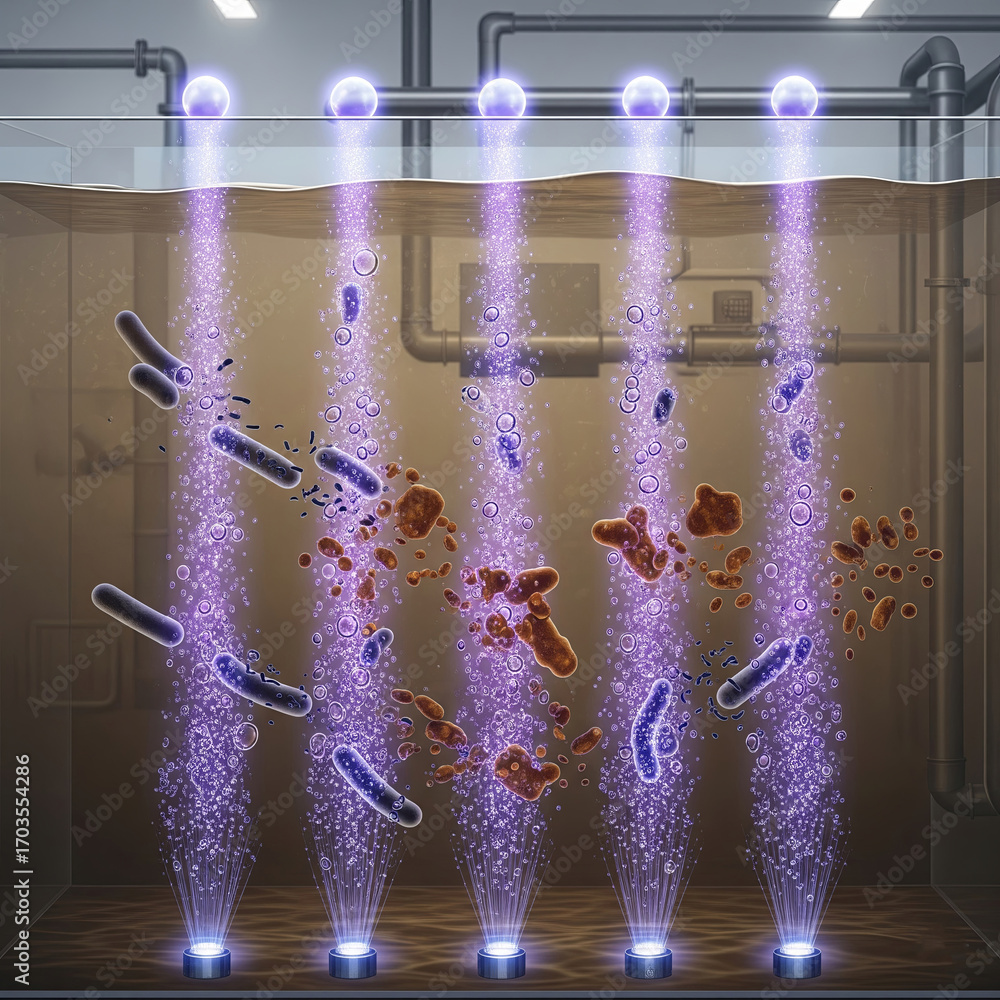
A groundbreaking study, spearheaded by researchers at Aarhus University, has revealed that intense ultraviolet (UV) light can efficiently generate hydrogen radicals in water, offering a potent and previously underestimated mechanism to finally break down per- and polyfluoroalkyl substances (PFAS) – the notorious 'forever chemicals' – without the need for additional chemical additives. This discovery marks a pivotal shift from merely filtering these pervasive pollutants to achieving their actual molecular degradation. PFAS compounds, characterized by their exceptionally strong carbon-fluorine bonds, have stubbornly resisted natural degradation and conventional treatment methods, leading to widespread contamination in water systems, soil, and living organisms globally. Current remediation often involves removal techniques like granular activated carbon (GAC), which only transfer the problem, creating concentrated PFAS waste that still requires disposal. The identification of hydrogen radicals as the dominant reactive species driving the defluorination and fragmentation of PFAS challenges earlier research that focused on other reactive species, providing a clearer roadmap for developing truly destructive treatment technologies amidst escalating global regulatory pressure. While this mechanism represents a significant scientific leap, scaling the UV-hydrogen radical pathway for widespread application faces practical hurdles, including the energy intensity of high-energy UV light production and the optimization of reactor design for effective light penetration and radical interaction. Researchers, including Associate Professor Zongsu Wei, emphasize that while not an immediate panacea, this clearer understanding of the degradation pathway provides critical direction for engineering next-generation photochemical reactors, accelerating the transition from laboratory demonstrations to sustainable, industrial-scale processes capable of tackling contamination in industrial effluents, groundwater systems, and municipal supplies.