UPI's Unstoppable Rise: Dominates Indian Digital Merchant Payments in July
Context mode is active. Hover over any highlighted term to see its definition. Click a nested term to go deeper.
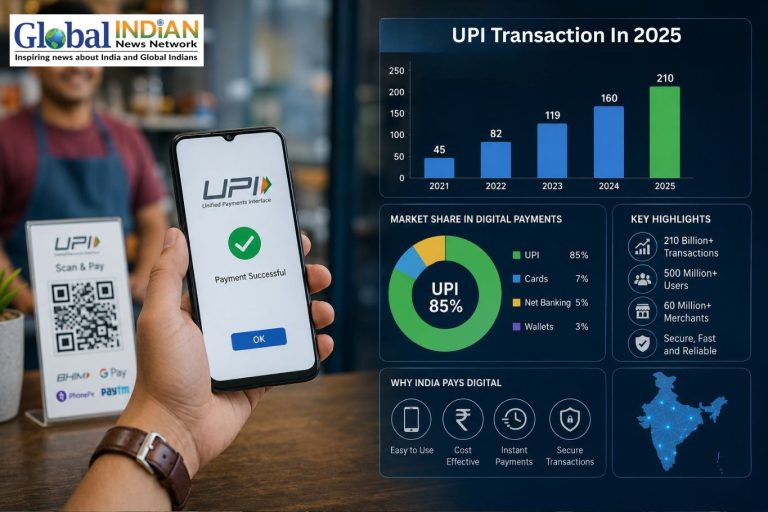
India's digital merchant payments surged to a massive ₹11.73 Lakh Crore in July 2026, with the homegrown Unified Payments Interface (UPI) tightening its grip on the market, capturing an overwhelming 77.3% share. This growth, a significant 19.6% jump year-on-year, underscores a clear shift in how Indians pay, with UPI-based transactions and credit card spending leading the charge, while debit card usage continues to slide. The rapid adoption of UPI for Person-to-Merchant (P2M) transactions is fundamentally reshaping India's payment landscape, making it the default choice for everyday retail purchases and transactions. In July, UPI processed a record 2,365.8 crore transactions with a total value of around ₹29.88 lakh crore across all categories, far exceeding other payment methods. Credit cards, despite seeing their own spending rise by 7.4% year-on-year and reaching ₹2.081 lakh crore in July, are still losing market share to UPI in merchant payments, falling to 17.7%. Meanwhile, debit card usage at merchant points declined, reflecting how consumers are increasingly choosing UPI over traditional plastic for direct bank account spending. Looking ahead, the focus is shifting from merely getting people to adopt digital payments to ensuring the long-term sustainability of the ecosystem, especially considering the current zero Merchant Discount Rate (MDR) for UPI transactions. Discussions are ongoing about potential nominal charges on higher-value UPI merchant transactions to support the underlying infrastructure. The National Payments Corporation of India (NPCI) continues to innovate, expanding UPI reach to more countries and working towards deepening financial inclusion, even as some studies point to a nuanced shift towards offline payments for certain bill payments and services.