US Navy's Newest Carrier, USS Kennedy, Catches First F-35C After Years of Delays
Context mode is active. Hover over any highlighted term to see its definition. Click a nested term to go deeper.
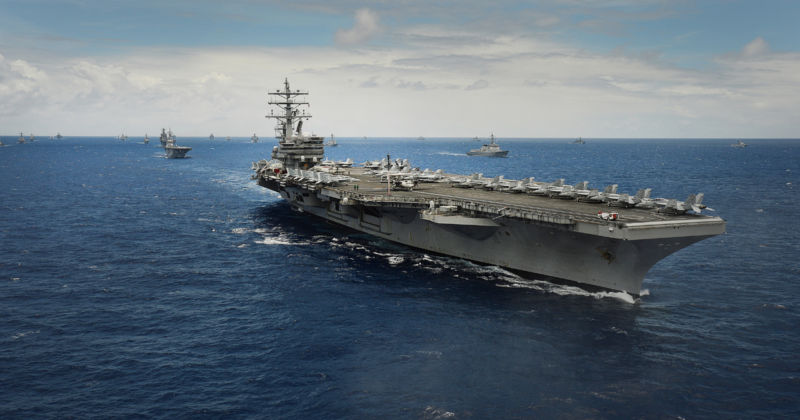
In a critical step for its future combat readiness, the future USS John F. Kennedy (CVN 79), the US Navy's second Ford-class aircraft carrier, successfully conducted its first F-35C Lightning II arrested landing on October 13, 2026, coinciding with the Navy's 251st birthday. This milestone occurred off the coast of Virginia, with a stealth fighter jet dropping its tailhook to catch a cable on the carrier's flight deck. A second F-35C also participated in the flight tests, carrying inert Joint Direct Attack Munition (JDAM) bombs, signifying the carrier's eventual strike capabilities. This long-awaited integration comes after years of delays for the Ford-class program, with the USS John F. Kennedy running four years behind its initial schedule and now set for formal delivery in March 2027. The lead ship, USS Gerald R. Ford (CVN 78), commissioned in 2017, faced significant challenges with its advanced Electromagnetic Aircraft Launch System (EMALS) and Advanced Arresting Gear (AAG), which initially prevented it from operating the F-35C. The successful landing on the Kennedy represents a major hurdle overcome, validating the compatibility of these next-generation systems with the Navy's premier stealth fighter, which acts as a crucial defense-penetrating and intelligence-gathering asset. With preliminary acceptance from Newport News Shipbuilding secured in late September, the USS John F. Kennedy is now undergoing intensive at-sea testing and evaluation by its crew before its official delivery next spring. The next crucial phase will involve continued Aircraft Compatibility Testing, including more launches and recoveries, to ensure full operational readiness. While the Kennedy is expected to initially deploy with a mix of F-35C and F/A-18E/F Super Hornet, the successful F-35C integration paves the way for the Ford-class carriers to fully realize their intended role as the backbone of future naval aviation, significantly enhancing US power projection.