Venus's Ancient Oceans: New Clues Emerge from Hell-World's Geological Scars
Context mode is active. Hover over any highlighted term to see its definition. Click a nested term to go deeper.
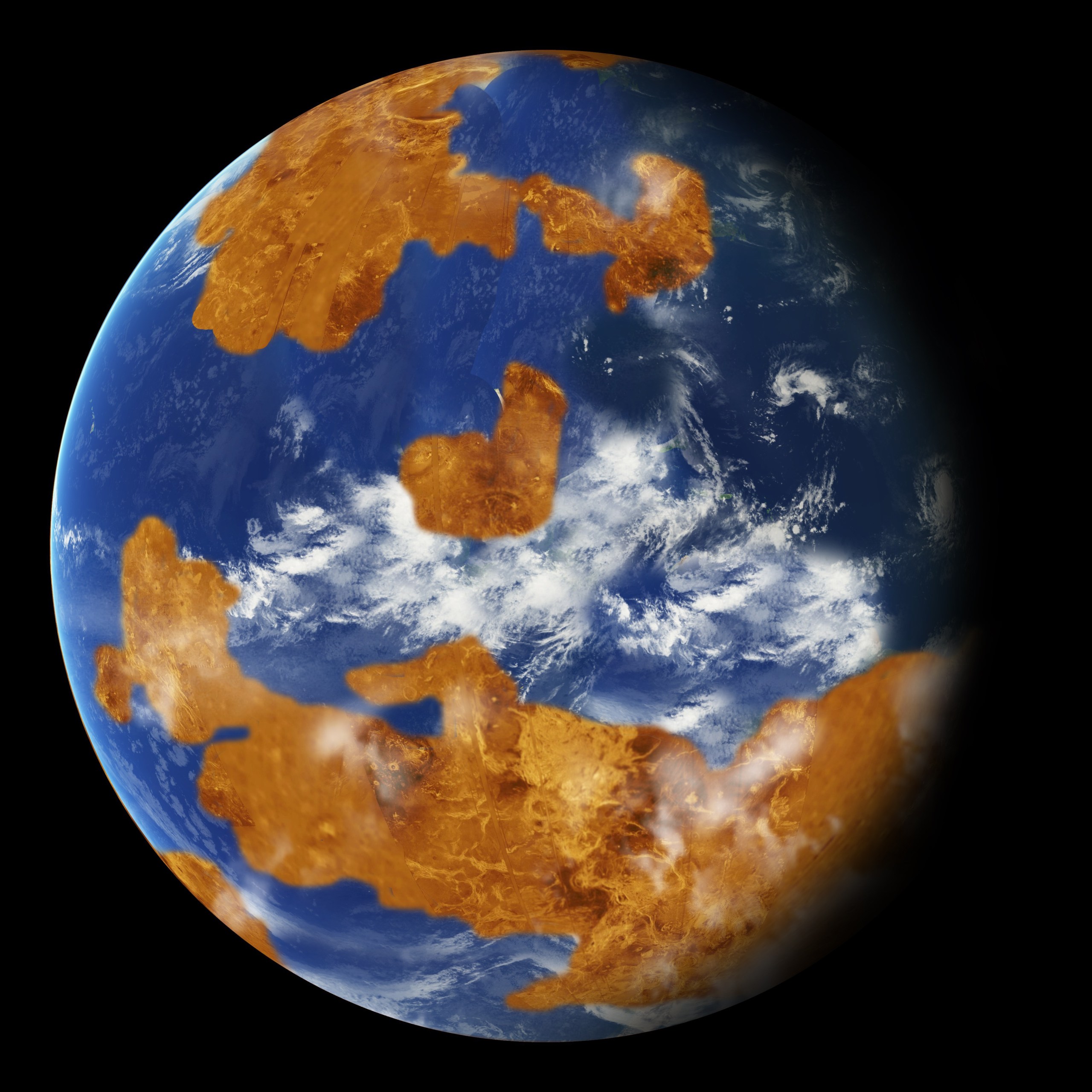
The 'hell-world' planet Venus, known for its scorching surface and thick, toxic atmosphere, might have once hosted vast oceans covering up to 90 percent of its surface, new research suggests. A study published in Earth & Planetary Science Letters, led by geologist Richard Ghail, points to specific geological 'scars' on Venus, like giant polygonal patterns and immense channels, as evidence of these ancient seas, challenging long-held assumptions that these features were purely volcanic. This groundbreaking interpretation offers a compelling new view of our planetary neighbor's past, hinting at a potentially watery world that held nearly half the volume of Earth's present oceans. This latest finding reignites a fiery debate among planetary scientists: was early Venus a 'wet' and potentially habitable world, or has it always been a parched, inhospitable inferno? While some models, including those from NASA GISS, have suggested Venus maintained liquid water for billions of years until a massive 'runaway greenhouse effect' took hold, other recent studies, like one from the University of Cambridge in late 2024, argue that Venus interior has always been too dry to support such extensive oceans. The stakes are high; understanding Venus evolution is key to deciphering how Earth-like planets develop and where to look for life beyond our solar system. The scientific community is eagerly awaiting a new wave of missions set to explore Venus, which could finally settle this mystery. NASA's upcoming DAVINCI and VERITAS missions, alongside ESA's EnVision, slated for launch in the late 2020s and early 2030s, are designed to map Venus surface and study its atmosphere with unprecedented detail. These probes will scrutinize the very 'geological scars' Ghail's team identified, providing crucial data to confirm or refute the ancient ocean hypothesis. The insights gained won't just rewrite Venus history; they'll refine our search for habitable exoplanets across the galaxy.