Wild Elephant Rampage Destroys Homes, Crops in Meghalaya Village; Locals Fear More Attacks
Context mode is active. Hover over any highlighted term to see its definition. Click a nested term to go deeper.
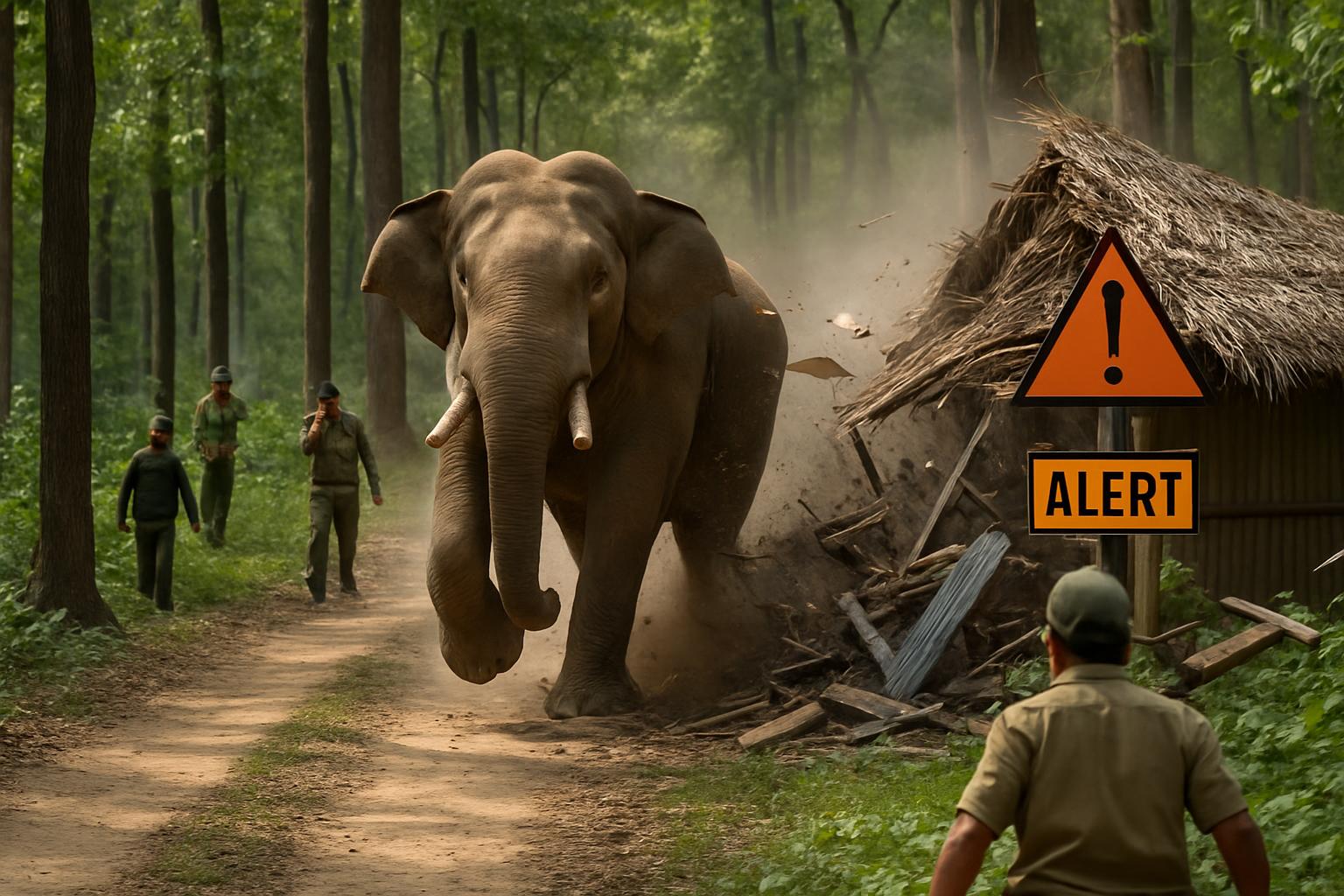
A herd of 13 wild elephants recently tore through Kolomboit village in Meghalaya Ranikor Civil Subdivision, flattening a residential house and destroying vast agricultural lands. The rampage, which occurred on Tuesday night, July 14, 2026, saw essential crops like betel nuts, pineapples, and ginger wiped out, leaving local farmer Ralding Kharryja, whose home was destroyed, and many others facing immense losses. This incident isn't new for residents of the South West Khasi Hills, where human-elephant conflict has become a harsh reality over the past decade, driven by increasing habitat loss and human encroachment into traditional elephant corridors. Villages once untouched by elephant presence now face frequent incursions, with herds venturing beyond forests into settlements in search of food and water, prompting a 'fear psychosis' among villagers who are now scared to tend to their fields. The Meghalaya government, under Chief Minister Conrad K. Sangma, has acknowledged the dire situation, calling for both immediate relief and long-term mitigation, yet locals often report delays in compensation and a lack of effective protective measures. Authorities are now under pressure to expedite compensation for affected families and implement more robust protection strategies, including exploring additional elephant corridors and strengthening the Forest Department rapid response. Neighbouring Assam has recently announced faster compensation for victims, a step Meghalaya might consider. The recurring destruction highlights the urgent need for a balanced approach that protects both human livelihoods and the endangered elephant population, ensuring sustainable coexistence in a region where these majestic animals have roamed for centuries.